Add Row
Add Element
UPDATE
Add Element
  • Home
  • Categories
    • Cleaning & Moving
    • Maintenance / Repairs
    • Remodeling & Construction
    • Landscaping / Outdoor
    • Security & Technology
    • Sustainability, Health & Safety
    • Interiors / Décor
    • Expert Interviews
    • DIY Home Projects
Home Wise News!
Wise Insights, Reliable Contractor Advice & Hands on DIY Know How for Savvy Homeowners
July 16.2025
3 Minutes Read

Bird Nest in Your Dryer Vent? Discover What You Need to Do Now!

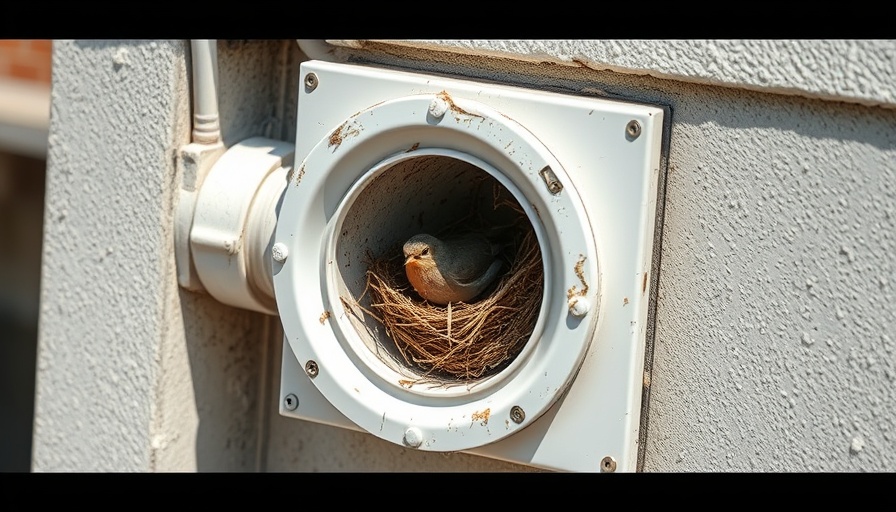
Bird nest in dryer vent on white wall, natural setting.

Why Bird Nests in Dryer Vents Are a Bigger Issue Than You Think

When we think of the cozy corners of our homes, the laundry room isn't typically at the top of the list. Yet, this often-overlooked space can become unintended wildlife habitat without us even realizing it. The phenomenon of birds nesting in dryer vents is not just a quirky fact — it can lead to serious home maintenance issues!

The Risks: Fire Hazard and Health Issues

Bird nests can obstruct airflow in the dryer vent, which not only hampers the dryer’s efficiency but also poses a significant fire risk. According to the National Fire Protection Association, failure to clean dryer vents is a leading cause of home fires. Nests made from twigs, grass, and other debris can create a perfect storm, leading to buildup that could potentially ignite.

Moreover, these nests can attract unwanted pests. When birds are nesting, they often bring the scent of food and debris, enticing rodents and insects closer to your home. It’s not a welcoming thought, especially when this becomes a gateway for more significant issues!

It's More Common Than You Think

In recent studies, reports indicate that an increasing number of homeowners are discovering nests in their dryer vents. Experts suggest that as urban sprawl encroaches on natural habitats, birds are seeking alternative nesting sites — your well-ventilated homes being quite enticing.

During the spring and summer months, it's particularly common. Birds are busy establishing their homes, and unfortunately, your dryer vent could easily look appealing. Knowing what to look for is essential!

How to Tell If You Have a Nest in Your Dryer Vent

Wondering if you’ve got a feathery family taking residence? Look for these clues:

  • Unusual Noises: Chirping or scratching sounds coming from the vent.
  • Decreased Dryer Performance: Clothes taking longer to dry, or damp clothes post-cycle.
  • Visible Signs: Twigs or bird droppings near the vent exit.

How to Safely Remove a Bird Nest

Removing a bird's nest is a sensitive task, especially during nesting season when some birds are protected by law. Here's how to handle the situation safely:

1. **Inspect the Nest:** Confirm that it is no longer being used. If you see eggs or chicks, wait until they have fledged.

2. **Use Care:** Wear gloves and a mask when removing the nest to protect yourself from any allergens. 3. **Clean the Vent:** After removal, clean your vent thoroughly to prevent future nesting. This step is critical since birds are likely to return if the setup is favorable. 4. **Install a Vent Cover:** A vent cover with a mesh can significantly reduce the chance of future nesting while allowing air to flow freely.

Preventing Bird Nests: Eco-Friendly Solutions

Considering a preventative approach? You’re on the right track! Use eco-friendly practices that ensure your home stays safe without harming wildlife.

- **Regular Dryer Vent Cleaning:** Make it a point to have your dryer vent cleaned frequently, especially if you discover any debris from previous nests. This can include hiring a professional service or using a lint brush designed for dryer vents.

- **Bird Deterrents:** Some homeowners have found success with nature-friendly deterrents. Hanging shiny objects around your vent or using bird-repelling sprays can make your vent less appealing to nesting birds.

Conclusion: Keep Your Home Safe and Cozy

Your home should be a sanctuary for you and your family, not a nesting ground for birds! By staying proactive and informed, you can protect your space from potential hazards while preserving our feathered friends. As you navigate your home maintenance, remember: a little awareness goes a long way!

Maintenance / Repairs

0 Comments

Write A Comment

*
*
Related Posts All Posts
02.24.2026

How Homeowners Can Combat Waterway Sedimentation Issues

Update Understanding Waterway Sedimentation: The Silent Threat For many homeowners, the gradual filling in of waterways is an invisible threat—a slow, creeping process that often goes unnoticed until it’s too late. As channels that once facilitated smooth water flow begin to overflow during even moderate rain, or ponds that once shimmered with clarity turn shallow and muddy, the significance of sedimentation comes into sharp focus. Not only does sedimentation reduce the capacity of these waterways, it also increases the risk of flooding and disrupts local ecosystems. The Mechanics of Sediment Movement Sediment includes particles of soil, sand, and organic matter that water carries downstream. Any rainfall event can drag along these materials, but they often settle in areas where water slows down, such as bends, inside channels, or near obstacles. According to the U.S. Environmental Protection Agency, various sources contribute to sediment buildup, including: Eroding banks Construction or land disturbances upstream Agricultural runoff Natural soil movements during prolonged storms Even minor disturbances can lead to a significant accumulation of sediment over time, making it imperative for homeowners to understand this process. Vegetation: A Double-Edged Sword While plants are essential for any aquatic ecosystem, their proliferation can exacerbate sedimentation issues. Dense aquatic vegetation can trap sediment as it flows through water, creating a feedback loop. As plants slow down water flow, more sediment settles, which in turn provides a fertile ground for even more plant growth. This cycle—if left unchecked—can drastically reduce a waterway's depth and width. Local homeowners may find that while the surface of a channel appears stable, a significantly reduced depth lies hidden beneath the waterline. The effect of this sediment buildup can lead to: Increased water levels during rainstorms Slower drainage post-rainfall Elevated risks of overflow Ignoring the Sedimentation Problem: The Consequences One of the biggest issues surrounding sediment buildup is that it can often go unnoticed for years. Gradual changes, like the loss of a couple of centimeters of water depth each year, may not catch the eye of an average observer. Often, homeowners only become aware of underlying issues when flooding occurs more regularly, or when they notice water pooling in areas that previously drained promptly. Neglecting to address these sedimentation issues can lead to hidden costs such as: Increased flood damage Threatened access roads and crossings Greater erosion of adjacent land Emergencies necessitating costly repairs Proactive maintenance generally proves more cost-effective than reactive fixes, which often ignore the fundamental causes of sedimentation. Preventative Measures for Homeowners Taking early action can save time, money, and effort in the long run. Homeowners can prevent significant issues by implementing a few targeted strategies, including: Periodically removing built-up sediment in channels Clearing problematic vegetation to allow for optimal water flow Stabilizing banks to prevent erosion Improving upstream drainage systems to enhance water flow efficiency Investing in these preventative steps—whether by hiring professionals or utilizing DIY techniques—can maintain the health of local waterways and minimize risks associated with sedimentation. Your Role in Waterway Health Homeowners play a crucial role in maintaining local waterways. By understanding sediment dynamics and actively participating in preventative measures, you not only enhance the functionality of your property but also contribute to sustainable environmental practices. If you notice changes within your waterways, take action early to preserve these vital resources. For personalized assistance and expert advice on sediment management solutions that fit your unique property, consider reaching out to specialists in your area.

02.21.2026

Discover How Much Drivers Pay for Auto Insurance by State: Essential Rates Insights

Update Understanding Auto Insurance Costs Across the StatesHave you ever wondered whether you’re overpaying for car insurance? With auto insurance rates fluctuating significantly across the U.S., knowing how your costs compare can be crucial in making informed decisions. Several studies have been conducted to uncover the average auto insurance costs, with Bankrate notably detailing its findings state-by-state. This knowledge can empower you to make better choices, whether you’re considering a move to a different state or re-evaluating your insurance plan.What Influences Auto Insurance Rates?Insurance providers consider numerous factors when calculating your premium, with location being the most significant. Bankrate’s report delves into vital influences like road conditions, the number of drivers, claims history, and even climate variations. The local law concerning required coverage levels also plays a significant role. For instance, states with stringent regulations often have higher average premiums, influencing drivers' decisions about coverage.Cheapest States for Auto InsuranceAmong the various states, some shine as affordable options for auto insurance. If you're seeking full coverage, Idaho takes the lead at approximately $1,476 per year, followed by Vermont and Maine. For minimum coverage, Wyoming stands as the most budget-friendly state, costing around $265 annually. Iowa and Vermont follow closely behind, showcasing that affordability is still attainable in some corners of the country.Expensive States to Insure a VehicleConversely, states like Louisiana, New York, and Florida emerge as the priciest for car insurance. The average cost in Louisiana reaches a staggering $4,135 for full coverage. Factors contributing to high rates include dense traffic and higher instances of uninsured drivers. These figures amplify the importance of comparative cost analysis, urging drivers everywhere to shop around.Why Should You Care About These Figures?The overall variance in auto insurance pricing can significantly impact your budget. Understanding how your state fares in comparison to others can not only help you gauge the fairness of your current rate but also alert you to potential savings. Given that many individuals commute for work or leisure, choosing the appropriate insurance and coverage level can be economically crucial.Comparative Analysis and Future InsightsThe trend in varying rates highlights the important role of geographical location in determining vehicle insurance costs. As highways improve and urban areas expand, there’s the potential for fluctuations in rates in the future. Observing the trends in auto insurance could reveal whether certain areas become more cost-effective or remain high, allowing consumers to strategize their insurance choices wisely.Take Action: Make Informed DecisionsWith this vital information at your fingertips, now is the perfect time to reassess your auto insurance. Don’t shy away from comparing rates among different providers; it could lead to significant savings. To optimize your policy, consider exploring additional coverages or even switching providers altogether. Don’t forget to check for discounts, as many insurers offer reductions for safe driving records, low mileage, or multi-policy discounts.ConclusionThe landscape of car insurance rates offers valuable insights that could guide any driver towards better financial decisions. Driving smart isn’t just about the vehicle; ensuring you’re adequately covered while saving money is equally important. Committing to informed insurance practices can help you navigate the insurance waters with confidence, be it through thorough research or simply shopping around.

02.21.2026

Why Your Water Heater Isn't Producing Hot Water and What to Do Next

Update Tackling the Frustration: Understanding Why Your Water Heater Fails to Deliver Hot Water Few things are more frustrating than stepping into the shower, ready for a refreshing wash, only to be greeted with icy water instead. A malfunctioning water heater can disrupt your entire routine, leaving you scrambling for solutions. Understanding the issues that lead to a lack of hot water is crucial not only for effective troubleshooting but also for deciding when to call in a professional. The Basics of Water Heater Operation Water heaters play a vital role in maintaining daily comforts, but they rely on several components to function efficiently. Electric water heaters utilize heating elements powered by electricity, while gas heaters depend on a pilot light to ignite the burner. Familiarizing yourself with these mechanics will help identify potential issues. Common Causes of Cold Water 1. Power Supply Issues: The Silent Saboteurs If you own an electric water heater and suddenly find yourself without hot water, the problem could stem from a tripped circuit breaker or a blown fuse. Your first step should be to check the electrical panel. Resetting the breaker could restore power; however, if the issue persists, consult a professional for safe diagnostics and repairs, as faulty internal components may require expert intervention. 2. Pilot Lights and Gas Supply: A Burning Concern For those with gas water heaters, a common culprit is a blown pilot light. If this flame goes out, your heater effectively shuts down. While re-lighting the pilot might solve the immediate problem, a persistent failure to stay lit could indicate issues with the thermocouple or gas control valve—both of which require professional assessment, particularly if there are signs of gas leaks. 3. Thermostat Troubles: Setting the Right Temperature Both electric and gas water heaters rely on thermostats to regulate temperature settings. If set too low or failing completely, hot water production will be inadequate. Adjusting the thermostat to the recommended 120°F is the first line of defense. If this does not produce results, contact a technician to evaluate and replace the malfunctioning thermostat. 4. Sediment Buildup: The Insidious Miner Over time, sediment can accumulate in the tank due to hard water minerals. This buildup reduces the heater's efficiency, potentially leading to strange noises or inconsistent temperatures. Signs include rumbling sounds or hot water running out significantly faster than expected. Flushing the tank annually is recommended, but heavy buildup often necessitates professional cleaning. 5. Aging Systems: When to Let Go Some water heaters can last anywhere from 8 to 12 years. As they reach the end of their lifespan, inefficiencies and breakdowns become common. If frequent repairs are needed, this could be an indication to consider a replacement instead—saving you both time and money in the long term. Knowing When to Call in the Experts While minor troubles may be easily solvable through basic resets or adjustments, many issues (i.e., gas supply or malfunctioning components) require specialized knowledge for safe repairs. Familiarizing yourself with local water heater repair services ensures professional help is just a call away, enabling timely and efficient restoration of your home's essential hot water supply. Conducting Routine Maintenance: Preventing Future Frustrations Prevention is often better than cure. Regular maintenance can save you from unexpected hot water shortages and extend the lifespan of your unit. Consider draining the tank at least once a year, inspecting the heating elements, and ensuring the thermostat functions properly. By staying proactive about your water heater, you can enjoy consistent hot water without hiccup. Final Words of Wisdom In understanding why your water heater isn’t producing hot water, you empower yourself to take the necessary action quickly—whether that involves simple troubleshooting measures or reaching out to a skilled professional. Avoiding prolonged periods without hot water improves not just your comfort but your overall quality of life. Don't let a lack of hot water disrupt your day-to-day activities. By being proactive and informed, you can address issues swiftly and efficiently. Remember to follow maintenance tips, and if serious problems arise, don’t hesitate to look for expert help!

Terms of Service

Privacy Policy

Core Modal Title

Sorry, no results found

You Might Find These Articles Interesting

T
Please Check Your Email
We Will Be Following Up Shortly
*
*
*