
Add Row
Add Element
UPDATE
Add Element
  • Home
  • Categories
    • Cleaning & Moving
    • Maintenance / Repairs
    • Remodeling & Construction
    • Landscaping / Outdoor
    • Security & Technology
    • Sustainability, Health & Safety
    • Interiors / Décor
    • Expert Interviews
    • DIY Home Projects
Home Wise News!
Wise Insights, Reliable Contractor Advice & Hands on DIY Know How for Savvy Homeowners
September 06.2025
3 Minutes Read

Master DIY Deck Inspection & Resurfacing: Essential Guide for Homeowners

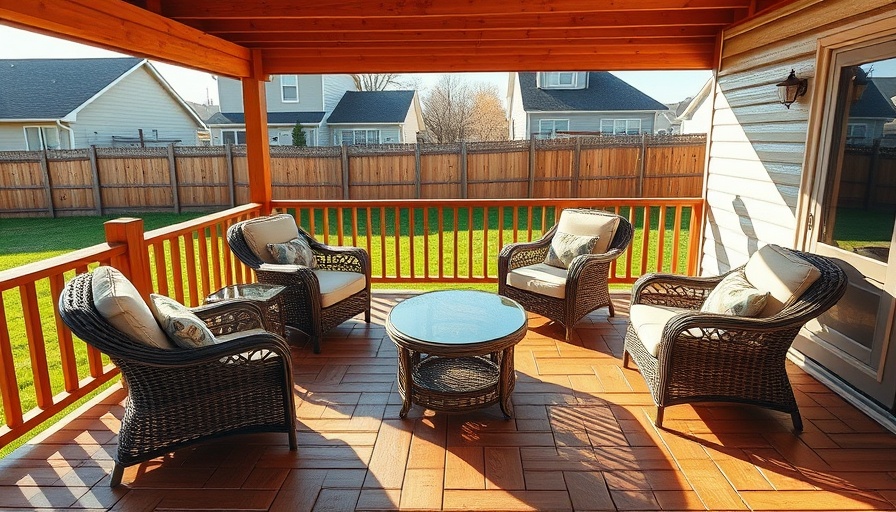
Wooden deck with wicker furniture in suburban backyard, DIY Deck Inspection and Resurfacing.

Assessing the Condition of Your Deck

Your deck is a crucial part of your home’s outdoor space, but wear and tear can affect its safety and longevity. Fortunately, a tired deck doesn’t necessarily mean it’s time for a full replacement. In just about 30 minutes, you can perform a DIY inspection that will help you determine if simple repairs, resurfacing, or a complete rebuild is needed. Before you dive into materials or tools, let’s focus on how to effectively assess your deck’s condition.

Preparing for the Inspection: Tools & Safety

Before you begin inspecting your deck, gather the following tools to ensure a thorough assessment:

  • Tape measure and speed square
  • Flashlight or headlamp
  • Screwdriver or awl for probing soft spots
  • Work gloves and safety glasses
  • Broom and stiff brush for debris
  • Chalk or painter’s tape to mark issues

Safety should be your primary concern. Be aware of your environment and wear appropriate gear. Accidents can happen, so take precautions to keep yourself safe while you inspect your deck.

Key Areas to Inspect: Where Decks Most Often Fail

Start your inspection at critical areas where decks commonly fail — the ledger board, posts, and stairs. Look for the following signs:

  • Ledger Board: Ensure it’s tightly fastened and properly flashed. Look for stains or gaps in flashing, as these may indicate water intrusion.
  • Posts: They should stand plumb and be set on solid support. Watch for tilting or crumbling concrete.
  • Stairs: Perform a slow walk test and shake the railings. If risers are uneven or treads feel springy, this could signal potential safety issues.

Taking the time to evaluate these areas can prevent larger issues down the road.

Analyzing the Deck Structure: Signs of Wear

Once you’ve checked the critical areas, take a step back and examine the deck structure as a whole. Sight down beams and joists to look for sags or abrupt changes that could indicate serious problems. Check for:

  • Sistered Joists: These are not necessarily problematic, but watch for poor fastening or noticeable corrosion.
  • Surface Inspection: Walk every section of your deck and take note of boards that cup, check, or flex underfoot. A few tired boards may be manageable, but widespread softness suggests significant underlying issues.

Remember that thorough inspections can save you from costly repairs later.

Recommendations for Surface Resurfacing

If your inspection reveals that the structure is mostly sound and any issues are surface-related, resurfacing could be the best option. Resurfacing is especially viable if the foundation is straight, dry, and able to support your new materials.

While planning for resurfacing, consider upgrading your railings as well. Integrating the new posts and blocking cleanly into the design will give you a more polished finished look and ensure safety for your family and guests.

Expert Tips: What Measurements to Capture

To assist in planning for repairs or resurfacing, capture key measurements during your inspection:

  • Overall deck dimensions
  • Joist spacing
  • Decking thickness and width
  • Railing post spacing and height
  • Stair rise, run, and tread thickness

These insights can help you model material counts and confirm that your frame meets today’s span requirements.

Deciding Whats Next: Repair or Replace?

The direction your project takes heavily depends on what you’ve found during your inspection. If the structure is sound but shows superficial wear, consider targeted repairs as the first solution. These repairs often provide the best return on investment.

Resurfacing is the next step if your foundation is still strong but requires a visual refresh. However, if major structural issues are present, you might have to consider a complete rebuild, which can transform your outdoor space.

Conclusion: Empowering Your Home Journey

Armed with knowledge and a straightforward plan, you’re now better prepared to tackle DIY deck inspection and resurfacing. Regular evaluations can keep your deck safe, functional, and beautiful for years to come. Don’t wait until safety is compromised; ensure your outdoor haven is up to standard today!

Maintenance / Repairs

0 Comments

Write A Comment

*
*
Please complete the captcha to submit your comment.
Related Posts All Posts
04.10.2026

Why Do Some Coins Have Ridges? Unlocking the Secrets of Reeding

Update The Importance of Coin Ridges: Understanding ReedingHave you ever examined a quarter or a dime and wondered about the tiny grooves running along the edge? You’re not alone. Known as "reeding," these small ridges serve a critical purpose that dates back centuries, stemming from the prevention of coin tampering to enhancing usability for individuals with visual impairments.Historical Context: The Rationale Behind RidgesThe introduction of coin ridges can be traced back to practices like coin clipping, where thieves would shave the edges of precious metal coins, such as gold and silver. As these coins held intrinsic value due to their metal content, the financial incentive for clipping was high. The innovative solution, reeding, made this tampering obvious. If a coin was altered, the distinct edges would show signs of wear, revealing the fraud immediately.The Evolution of Coin Manufacturing: From Hand-Hammering to Precision MintingHistorically, coins were produced through hand-hammering, making them irregular and easy targets for thieves. However, the mid-1500s saw a shift to mechanical minting processes which ensured coins were round and consistent. The inclusion of reeding during this production phase not only added security but also enhanced the aesthetic and functional qualities of coins.The Dual Functionality of Ridges in Modern EconomicsWhile today’s coins are not made of precious metals, ridges still play a significant role. They help distinguish between denominations quickly, essential for cashiers and individuals sorting coins. Beyond convenience, for those with visual impairments, the ridges provide a tactile recognition system, allowing easier handling of money. In this way, reeding ensures accessibility in everyday transactions, reflecting an inclusive approach to currency design.Modern Significance: Coins Without RidgesNot all coins feature ridges; pennies and nickels are common examples due to their base metal composition, which doesn’t necessitate added security measures. However, the use of reeding persists even in lower denominations, keeping a consistent design that consumers have come to trust. The comfort of familiarity in currency design fosters public confidence, an essential aspect of monetary systems.Practical Implications of Coin Ridges for ConsumersUnderstanding why some coins have grooves and others don’t goes beyond mere curiosity. This knowledge helps consumers appreciate the measures taken to ensure the reliability and integrity of their everyday money. Whether you are engaging in a DIY project requiring budgeting or simply sorting through a jar of coins, knowing the practical benefits of reeding enhances your day-to-day financial interactions.The Future of Coin Design and the Relevance of RidgesExpectations for coin design are evolving, yet the principles behind reeding remain rooted in historical practices. As we advance, incorporating modern technologies alongside traditional designs ensures currency remains secure and efficient. Innovations may lead to new forms of tactile features, catering to various user needs while keeping historical integrity intact.Conclusion: A Connection to Our Financial HeritageNext time you handle a quarter or examine a collectible coin, consider the journey those tiny ridges have taken through history. The mere existence of reeded edges serves as a reminder of humanity’s efforts to secure our finances against fraud and maintain the integrity of currency. The study of coin edges encapsulates not just a feature of currency but a legacy of craftsmanship and innovation that affects real-life transactions today. While you peruse through your change, take note of how deeply connected we are to these small, yet significant aspects of our economic systems.

04.09.2026

Discover Why You Should Never Store Certain Items in Your Laundry Room

Update Why Your Laundry Room Isn't a Safe Haven We all know the laundry room as a space for washing, drying, and folding our favorite clothes, but is it truly a safe storage haven? As it turns out, there are several items you should steer clear of placing in this space due to moisture, heat, and a few other unsavory characteristics unique to laundry rooms. Let’s unpack the reasons behind these recommendations and what they mean for your home. 1. Fresh Produce: The Surprising Reality Although it might seem innocuous to store apples or tomatoes near the washing machine, fruits and vegetables flourish best in controlled temperatures away from humidity. In a laundry room, they risk spoilage, as moisture-laden environment can lead to mold growth. According to the USDA, storing produce in a consistently cool environment is essential for longevity. So, instead of tossing those vegetables onto the shelf next to your detergent, perhaps consider a dedicated pantry or kitchen area. 2. Important Documents: Moisture Isn’t Your Friend Are you guilty of tucking away bills and important paperwork into laundry room cabinets? This could be a critical mistake. The damp climate affects not only paper quality but can lead to irreversible damage over time. Instead, opt for a waterproof storage box stored in a dry area, such as a home office or filing cabinet. This quick reassessment could save you from future headaches while searching for that vital tax document. 3. Electronics: The Moisture Danger Zone Nowadays, a smart home is just a click away, and with that comes the influx of electronic devices—which many assume can be stored anywhere. Think again: placing devices like routers or smart speakers in your laundry room could lead to moisture damage that compromises their performance. As a tech enthusiast, I can’t stress this enough—protect your gadgets by storing them in climate-controlled spaces away from any potential water hazards. 4. Cleaning Supplies: A Ticking Time Bomb While it’s tempting to keep all cleaning supplies in one easy-to-access location, doing so in a laundry room poses safety risks. According to health experts, placing chemicals in humid areas can compromise their efficacy and increase the chances of leakage from deteriorated containers. For safety’s sake, storing them in a locked cabinet, preferably in a more stable environment, is ideal. Ensure that you follow any specific storage guidelines outlined by the manufacturer for best results. 5. Photos and Keepsakes: The Moisture Absorbers Treasure boxes of family photos and keepsakes belong in the dryest corner of your home. Unfortunately, laundry rooms bustle with humidity that could warp and ruin memories. Protect your sentimental items by choosing a more stable area, where moisture isn’t an enemy lurking around every corner. Consider investing in airtight storage solutions to ensure your memories remain intact. 6. Pet Supplies: A Cozy Home for Pests If you’re a pet owner, you might find it convenient to store food and supplies in the laundry room. However, the combination of moisture and warmth can invite unwanted pests, leading to potential cross-contamination. Storing pet supplies in a sealed container, away from the often warm and moist laundry room, minimizes risks. After all, nobody wants a family of ants enjoying Fluffy's kibble! Final Thoughts: Decluttering Your Space for Better Living Being mindful of what you store in your laundry room will enhance the overall functionality of the space, not to mention bolster your household's safety. Take a moment to evaluate your current storage practices and make adjustments as necessary. Identifying spaces within your home for specific items significantly contributes to a more organized and efficient living environment—and who wouldn’t appreciate less clutter? Ultimately, your home reflects the various lifestyles you lead, and being intentional about your storage methods solidifies that reflection. As you continue rearranging your space, it may also be worthwhile to consider upcoming trends in home organization or the latest smart home technologies that streamline your chores. Trust me, your future self will thank you!

04.09.2026

How the Artemis II Crew Overcame Toilet Troubles in Space.

Update When Toilets Go to Space: A Challenges of Cosmic Proportions Imagine being on a mission to the moon, surrounded by the vastness of space, when suddenly, the one crucial piece of equipment meant to manage hygiene—a toilet—breaks down. This scenario became reality for the astronauts aboard Artemis II during their recent historic journey. What initially seemed like a plumbing issue turned into an unexpected test of ingenuity and teamwork for the four-person crew. The Toilet Conundrum: What Went Wrong? On the third day of the Artemis II mission, a fixed-gear toilet malfunctioned, raising alarms and prompting mission control to instruct the crew to limit its use. Astronaut Christina Koch reported “a kind of burning heater smell,” leading to concerns about the toilet’s functionality. Ground control quickly began investigating the issue and discovered the likely culprit was frozen urine stuck in the vent line—a predicament not unlike the plumbing issues we face back on Earth. In zero-gravity environments, the conditions are starkly different, with temperatures reaching as low as -455 degrees Fahrenheit in space. This creates unique challenges for the plumbing systems developed for lunar missions. As reported by The Independent, the Universal Waste Management System—the $23 million toilet on Artemis II—was developed specifically for deep-space missions, making its operational failure all the more pressing. Innovative Solutions: How Ground Control Turned the Tables Facing a toilet crisis in space may seem daunting, but NASA's ground control executed a strategy that mirrored a common troubleshooting technique here on Earth: leveraging the sun's warmth. The solution involved rotating the Orion capsule so the sun’s rays could melt any ice clogging the vent line. The technique worked, enabling a partial unclogging that allowed some urine to be expelled. The approach exemplified an adaptable problem-solving strategy in extreme conditions. Lessons from Space: What DIY Enthusiasts Can Learn NASA’s handling of the Artemis II toilet issue provides more than just insights into engineering challenges; it offers valuable DIY lessons for homeowners as well. Whether you’re facing a simple clog or a malfunctioning toilet, here are some practical handyman tips: Check for Clogs: Just like with the Artemis toilet, begin by assessing whether there’s a blockage in the system. Utilize a plumber's snake or a basic plunger to dislodge any clogs. Inspect the Float Mechanism: Ensure the float arm isn’t cutting off your water supply prematurely, much as the Orion's systems needed to work properly to function. Assess the Flapper Seal: A flapper that isn’t sealing correctly can lead to constant running water, draining both your tank and wallet. Community Response: Triumph Over Adversity In the world of space exploration, where harmonizing human ingenuity with technology is key, the crew's camaraderie during the toilet crisis shone brightly. Christina Koch humorously dubbed herself the “space plumber,” showcasing the crew’s ability to maintain composure amid pressure. Conversations surrounding toilet troubles among astronauts remind us of the importance of teamwork and flexibility when tackling unexpected challenges. Koch’s excitement upon hearing that their restroom was operational again was more than mere relief; it was a collective victory encapsulating the human spirit in the face of adversity. Toilets Through the Ages: Historical Context The evolution of toilets is notably tied to the advancements in space travel. Surprisingly, it wasn't until 1973 that operable toilets were sent to space, with earlier missions like the Apollo series managing waste in less than ideal conditions. The amusing anecdote of floating waste from Apollo 10 reminds us that human innovation has come a long way—goodbye floating turds, hello sophisticated waste management! The improvements on the Artemis II’s toilet have set a new standard for future endeavors beyond Earth. The Future of Space Toilets: Looking Ahead As NASA prepares to return humans to the moon and eventually on to Mars, the lessons learned from Artemis II will inform the design of toilets in future missions. Future designs will likely incorporate technological advancements that ensure reliability in space environments. With increasing interest in space exploration, mastering waste management will be key for sustaining long-term human presence on other celestial bodies. In Conclusion: Stay Inspired Ultimately, while space and home plumbing may seem worlds apart, there are lessons to be learned from both spheres. As we reevaluate our approaches to simple maintenance tasks, we can find inspiration, knowing that even the greatest challenges can be tackled with innovative thinking and a touch of humor. With each failure comes a new lesson, and in every toilet mishap, whether on Earth or in the cosmos, we find an opportunity to learn. So, next time you face a plumbing issue, channel your inner astronaut. Stay calm, think creatively, and remember that even in space, it's all about problem-solving!

Terms of Service

Privacy Policy

Core Modal Title

Sorry, no results found

You Might Find These Articles Interesting

T
Please Check Your Email
We Will Be Following Up Shortly
*
*
*